

Pathways into place-based work

This map shows different ways people contribute to place-based work – individually and collectively. It helps you orient yourself in the work, based on where you are right now. You can start anywhere. Follow what feels familiar, or explore other ways of getting involved. Click a pathway or practice point to explore further.

Don’t know where to start? Visit the landing pages for Collective pathways and Individual pathways to get a sense for the different parts of the map.

Pathways Map - Key

This map shows different ways people contribute to place-based work - individually and collectively - and where those forms of work connect.

Colours

Green - Individual pathways

Red - Collective pathways

Pathways

Each colour contains three pathways.

Pathways represent different ways of contributing, not stages or levels.

Practice points

Each circle represents a practice within a pathway.

Select a highlighted practice point to explore reflections, activities and resources.

You can visit practices in any order and return to them at any time.

Overlaps

The blue highlighted areas show where individual and collective pathways connect.

These highlight shared practices that influence both personal contribution and the wider conditions for place-based work.

Overlaps are shared ground, not additional steps.

How to use the map

There is no start or end.

Begin wherever feels most relevant to you.

Explore one pathway or move between several.

The map is designed for exploration rather than a fixed sequence.

Changing the system together

Explore this pathway if you are working with the structures and relationships that shape place-based work – including whose knowledge is centred, how decisions are made and how community authority is exercised. 

Many people arrive here after trying to make systems work in place. They may be working in formal roles or through informal coordination, advocacy or relationship work, while navigating rigid awards, funding cycles that disrupt continuity, and other constraints. 

Systems change grows through shared learning, long-term partnerships, and practice that follows community direction. It deepens when people and organisations question assumptions, share influence more equitably and adapt how they work together. 

The reflections below help you explore how power, resources and expectations are negotiated, and how these can shift to strengthen community authority, accountability and long-term local leadership. 

What supports this pathway

One-page overview

Download a one-page overview of this pathway to help you get oriented and consider a next step.

Download
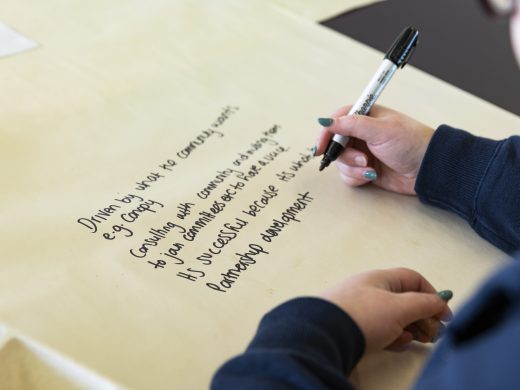
A person writes notes with a black marker on a large sheet of paper. The notes mention topics like community sport, consulting with communities, and partnership development. Only the person's hands and part of their arm are visible.

Data and evidence

Understanding change requires drawing on lived experience, local knowledge and practice insight alongside quantitative data, allowing patterns to emerge and learning to inform decisions. 

Explore this further
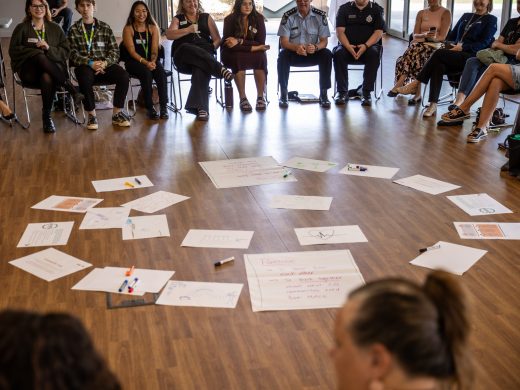
A group of people sit in a circle on chairs in a spacious room. In the centre of the circle, large sheets of paper with handwritten notes and markers are spread out on the wooden floor.

Shared decision-making

Systems change is strengthened when communities have genuine authority in decisions, shaping priorities, design and accountability in ways that reflect local realities. 

Explore this further

The PLACE website is not compatible with Internet Explorer. Please use a modern browser such as Chrome, Firefox, Edge, or Safari for the best experience.