

Pathways into place-based work

This map shows different ways people contribute to place-based work – individually and collectively. It helps you orient yourself in the work, based on where you are right now. You can start anywhere. Follow what feels familiar, or explore other ways of getting involved. Click a pathway or practice point to explore further.

Don’t know where to start? Visit the landing pages for Collective pathways and Individual pathways to get a sense for the different parts of the map.

Pathways Map - Key

This map shows different ways people contribute to place-based work - individually and collectively - and where those forms of work connect.

Colours

Green - Individual pathways

Red - Collective pathways

Pathways

Each colour contains three pathways.

Pathways represent different ways of contributing, not stages or levels.

Practice points

Each circle represents a practice within a pathway.

Select a highlighted practice point to explore reflections, activities and resources.

You can visit practices in any order and return to them at any time.

Overlaps

The blue highlighted areas show where individual and collective pathways connect.

These highlight shared practices that influence both personal contribution and the wider conditions for place-based work.

Overlaps are shared ground, not additional steps.

How to use the map

There is no start or end.

Begin wherever feels most relevant to you.

Explore one pathway or move between several.

The map is designed for exploration rather than a fixed sequence.

Stepping into local leadership

Explore this pathway if you are taking on greater responsibility in your place – supporting others, coordinating efforts, or using your experience to strengthen what is already happening. 

Leadership in place-based work takes many forms. It may be grounded in cultural authority, trusted relationships, lived experience or professional expertise. It is not defined by job titles or formal positions. 

People often step into leadership because others look to them for coordination, care or guidance – sometimes without clear authority, time or resourcing. Leadership develops through trust and participation in local activity, conversations and relationships, not just through structured programs or formal pathways. 

For example, a local Elder guiding a community project through cultural knowledge and longstanding relationships is exercising leadership. A volunteer who organises activities, shares information and helps others stay connected is also demonstrating leadership, even without formal authority. 

The reflections below help you share responsibility, support others and stay connected to purpose as your role evolves.

What supports this pathway

One-page overview

Download a one-page overview of this pathway to help you get oriented and consider a next step. 

Download

Colourful paper origami cranes hang from strings, creating a vibrant and delicate mobile against a blurred background. The cranes are made from various patterned and solid-coloured papers.

Leadership

Leadership often emerges through relationships, as people begin to trust you to listen, share responsibility and help coordinate what matters in your place. 

Explore this further
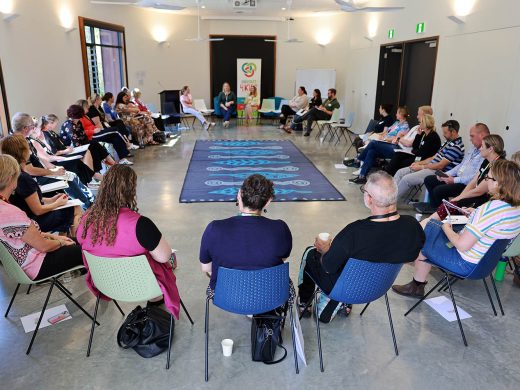
A group of people sit in a large circle on chairs in a bright room, engaged in a discussion or workshop. Some hold notebooks or coffee cups; a patterned rug lies in the centre of the circle.

Community-governed structures

As responsibility grows, leadership is locally authorised and shared, ensuring community voices guide decisions and responsibility is collective. 

Explore this further

The PLACE website is not compatible with Internet Explorer. Please use a modern browser such as Chrome, Firefox, Edge, or Safari for the best experience.