
The PLACE website is not compatible with Internet Explorer. Please use a modern browser such as Chrome, Firefox, Edge, or Safari for the best experience.
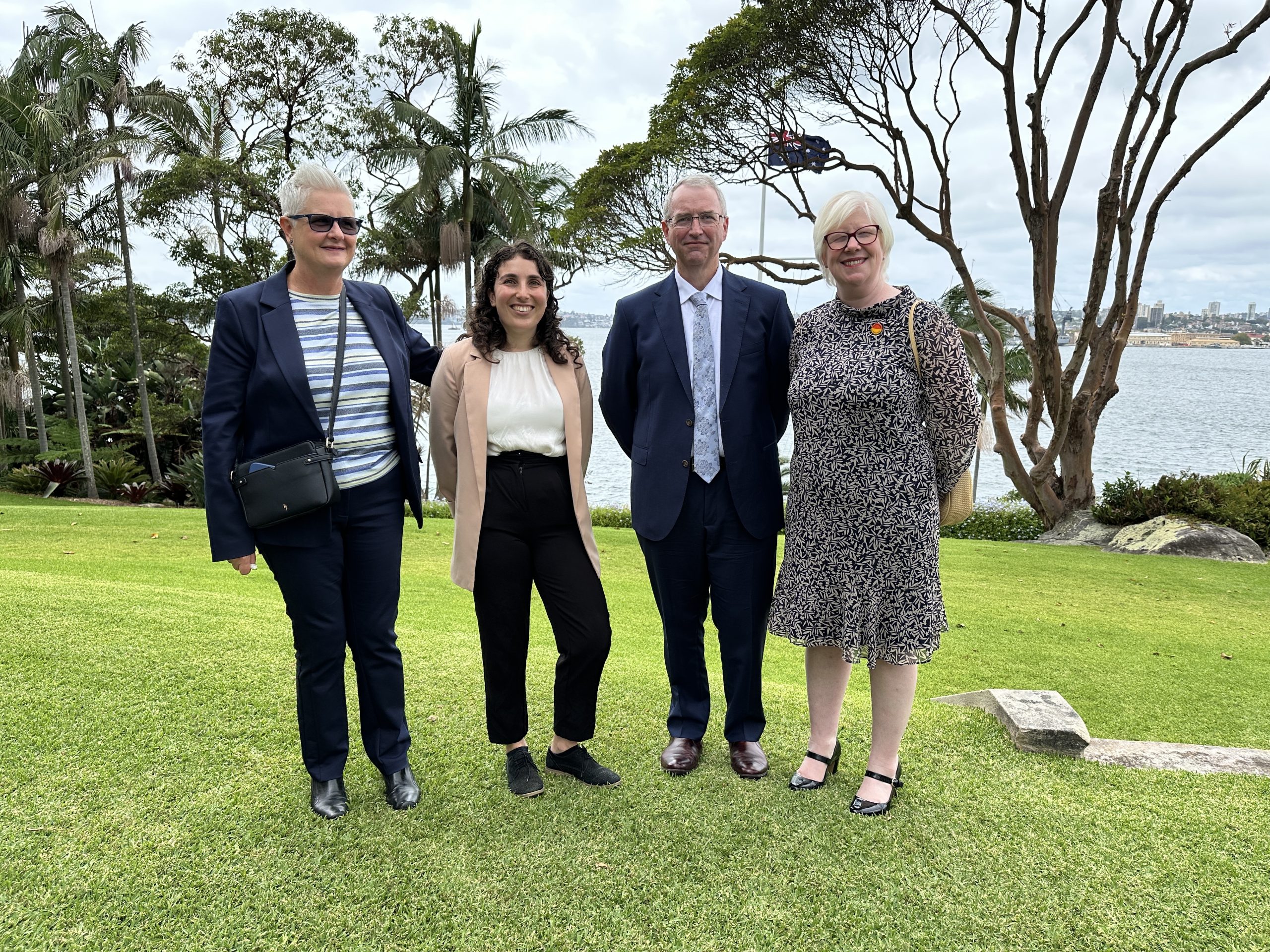
(From left to right: Liz Yeo, Paul Ramsay Foundation; Tess Gordon, PLACE; Andrew Davitt, PLACE; and Penny Daikin, Minderoo).
Last month, PLACE team members Tess Gordon (Director, Strategy and Governance) and Andrew Davitt (Director, Collaborative Solutions) joined leaders and advocates at Admiralty House in Sydney for the public launch of two important companion reports focused on strengthening primary prevention in Australia.
Co-hosted with Her Excellency the Governor-General, Samantha Mostyn AC, the event marked a significant milestone in ongoing national efforts to address the conditions that shape wellbeing before harm occurs.
The National Primary Preventative Framework, authored by Bernadette Black (CEO, SEED Futures) and Kate Harrison Brennan of the Sydney Policy Lab, and Prevention Nation, authored by Bernadette Black through the support of the Winston Churchill Trust (Australia), set out a compelling case for change and practical pathways forward. The work reflects more than three years of collaboration, international learning and deep engagement around how Australia can better prevent disadvantage in the first 1000 days of a child’s life.
For PLACE, the conversation resonated strongly. Primary prevention is most powerful when communities are trusted partners, when lived experience and expertise are brought together, and when long-term investment replaces short-term cycles. The emphasis throughout the launch was on collaboration across sectors, jurisdictions and communities, and the need for structural reforms that support prevention with sustained commitment.
The reports also point to the governance and funding shifts needed to embed prevention as national practice, including proposals such as a National Primary Prevention Office to provide continuity beyond electoral cycles.
We were pleased to be part of the discussion and to see prevention gaining the policy attention it deserves. There is significant opportunity ahead for communities, governments and partners to continue building the conditions for lasting change.